
If you’re considering breast implants, you’ve probably learned all about them, including the types, sizes, incisions, and more. One of the most important aspects to consider is “are breast implants safe”. While most women are happy with their results and never have significant problems, there are risks to breast implant manufacturers to consider. Below are the most important safety considerations to know about breast implants . If you have any concerns or are wondering are breast implants worth it, please talk about them with your board certified plastic surgeon.
FACTORS TO CONSIDER BEFORE GETTING BREAST IMPLANTS
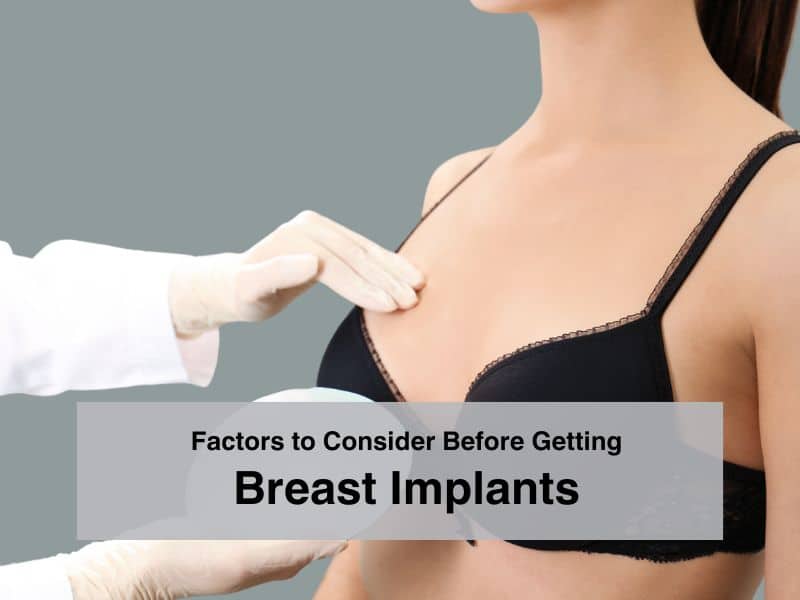
It’s wise to make a well-informed decision before you make a significant health decision certain breast implants that could affect the rest of your life. Consider these factors about breast implants and plastic surgery:
- Breast implants won’t last forever for most people. At some time, you may need follow-up implant surgery to remove or correct the implant to avoid problems with breast tissue. If you want to have them taken out later, you may need a breast lift to get your breasts back to how they used to look.
- Implant rupture is a rare but possible risk. While not inherently dangerous, revision surgery will be required for implant rupture and may be due for breast implant removal.
- If you have silicone breast implants, FDA recommends an MRI every two years, starting three years after surgery. An MRI allows your doctor to check for ruptures.
- Breast implants can make it harder to do breast screening tests, including mammograms. You could need different tests that give the doctor special views of the breasts. Images could be more complex for your doctor to read.
More about safety considerations below.
BREAST IMPLANTS AND BREAST AUGMENTATION
Breast implants play a central role in breast augmentation, a cosmetic procedure designed to enhance breast size, shape, and overall proportion. Silicone and saline implants are the most common options, each offering distinct benefits in terms of feel, appearance, and customization. During breast augmentation, implants are carefully selected and placed to complement a patient’s anatomy and aesthetic goals, helping to improve symmetry, restore lost volume after pregnancy or weight loss, and create a fuller, more balanced silhouette with breast tissue. When performed by a qualified plastic surgeon, breast augmentation with implants delivers natural-looking, long-lasting results tailored to the individual.
BREAST IMPLANT RUPTURES
One of the most important considerations about breast implants is they usually don’t last a lifetime. Breast implants have a lifespan, and a few may rupture eventually affecting breast tissue. That sounds like a big deal, but most doctors say that rupture usually isn’t a health risk.
Most silicone implants have gel in them, so the silicone gel implants themselves will not escape into the body if it ruptures. If a leak happens, it usually stays in the capsule or the implant pocket. Silicone is an inert material and rarely causes any reactions to the body.
If you have saline implants and a rupture, the liquid will be naturally absorbed by the body.
Whichever implant you have, if there’s a rupture whether silicone gel or saline, you will need revision surgery to remove the old implant and replace it.
As far as how long implants can last, the general rule is 10 to 15 years, with some lasting for life.
BIA-ALCL
Another risk of breast implants is a rare form of non-Hodgkin’s lymphoma that can develop in the fluid and scar tissue around an implant. This is a rare but sometimes deadly side effect that is related to saline and textured silicone implants. Little is understood about the cause, but some doctors think the implant’s surface can increase the cancer risk.
That’s why highly textured implants aren’t customarily used anymore. However, a few patients around the globe have smooth breast implants who have BIA-ALCL, but they previously had textured implants.
CAPSULAR CONTRACTURE
Capsular contracture is an abnormal tightening of the scar tissue that forms around any breast implant. It can make your breasts feel stiff, sore, and unnatural in shape. It’s one of the most common problems of breast implant surgery. It’s not dangerous to your health, but it’s an undesirable outcome that usually requires revision or reconstructive surgery.
Researchers aren’t sure why it happens but are probably due to more than one factor. Some data suggests that it’s more common after revision surgery and in patients who had the implants put over the muscle instead of below it.
BREAST RECONSTRUCTION USING IMPLANTS
Breast reconstruction using implants is a surgical option designed to restore the shape and appearance of the breasts after mastectomy or breast-conserving surgery. This approach typically involves placing a silicone or saline implant to recreate breast volume and contour, helping patients regain a sense of wholeness and confidence following breast cancer treatment or preventive surgery. Implant-based reconstruction may be performed in a single stage or in multiple stages using a tissue expander that gradually prepares the chest tissue for the final implant.
Implant reconstruction offers several benefits, including shorter surgery times and recovery compared to some flap-based procedures. The technique, implant type, and timing of reconstruction are carefully tailored to each patient’s anatomy, cancer treatment plan, and personal goals. While implant-based reconstruction may require future revisions over time, it provides a reliable and effective option for achieving natural-looking, balanced breast contours.
BREAST IMPLANT REVISION SURGERY
The time may come to have breast implants removed or replaced. You could have some questions about the safety of the revision surgery. As doctors always point out, any surgery with anesthesia carries risks. Still, surgical complications seldom occur in healthy patients who don’t have health risks such as heart disease, diabetes, obesity, or high blood pressure.
However, some plastic surgeons say revision surgery slightly increases the risk of capsular contracture. Because of that risk, it’s essential to listen to your surgeon’s post-surgery instructions, such as avoiding drinking, certain medications, massage, and other risky activities that could lead to scar formation or bleeding.
Another potential problem you may have heard of is breast implant illness or BII identified by an MRI Scan. Doctors don’t consider BII as a disease, but some women claim they had autoimmune symptoms after having breast implants and improved when they were taken out.
If you or anyone in your family have a history of autoimmune disorders or severe allergies, be sure to talk to your surgeon about them.
BREAST IMPLANTS AND RADIATION THERAPY
Breast implants can be used in reconstruction or augmentation for patients who have undergone or may require radiation therapy, but special considerations are involved. Radiation can affect the skin and underlying tissues by reducing elasticity, blood supply, and healing capacity, which may increase the risk of complications such as capsular contracture, implant firmness, or changes in breast shape. For this reason, careful planning and timing are essential when implants are used in patients receiving radiation.
In many cases, surgeons may recommend a staged approach, beginning with a tissue expander placed before or after radiation, followed by a permanent implant once radiation treatment is complete and tissues have stabilized. Some patients may also be advised to consider alternative reconstruction options, such as flap procedures, depending on tissue quality and long-term goals. A personalized consultation with a plastic surgeon experienced in post-radiation reconstruction is crucial to determine the safest and most effective treatment plan.
Questions and Answers about Breast Implants
What are the risks of breast implants?
- Additional surgeries
- Breast implant associated-anaplastic large cell lymphoma (BIA-ALCL), which is a cancer of the immune system
- Systemic symptoms, commonly referred to as Breast Implant Illness (BII)
- Capsular contracture (scar tissue that squeezes the implant)
- Breast pain
- Ruptured Implants (tears or holes in the shell) of saline and silicone gel-filled implants
- Deflation (with visible change to breast size) of saline-filled implants
- Silent (without symptoms) rupture of silicone gel-filled implants
- Infection
- Future Implant removal
- Multiple risky surgical procedures
Are breast implants safe now long term?
Systemic symptoms, often referred to as breast implant-related illness, may potentially be linked to the presence of breast implants. The precise connection between these symptoms and breast implants remains unclear.
Reported indicators encompass fatigue, memory difficulties, skin rashes, challenges in concentration and cognitive function, as well as some joint pain and discomfort.
Are silicone breast implants safe?
Yes, silicone breast implants are considered safe when they are FDA-approved and placed by a board-certified plastic surgeon. Modern silicone implants are made with cohesive gel designed to hold its shape, reducing the risk of leakage if the implant shell is compromised. Extensive research and long-term studies have shown that silicone breast implants do not increase the risk of breast cancer or autoimmune diseases in the general population.
Are saline breast implants safe?
Yes, saline breast implants are considered safe for scar tissue and are FDA-approved for breast augmentation. These implants are filled with sterile saltwater, which is naturally absorbed by the body if the implant were to leak or rupture. Because saline implants are filled after placement, surgeons can adjust volume more precisely, and ruptures are usually noticeable right away.
How safe are breast implants?
Breast implants are considered safe for most patients when they are FDA-approved and placed by a board-certified plastic surgeon. Both silicone and saline implants have been extensively studied and are commonly used worldwide. Advances in implant design and surgical techniques have significantly improved safety, durability, and overall outcomes, making complications less common than in the past.
Who should not get breast implants?
You are going through pregnancy or currently breastfeeding. You have been diagnosed with breast cancer or have received an abnormal mammogram result. You are unwell or in the midst of fighting an infection.
What happens if you never replace breast implants?
This can lead to the development of firm or rigid breast tissue or a noticeable deformity that you can either feel or observe. As breast implants are not intended for lifelong use, breast implants require replacement after approximately 10 to 15 years on average.
BOOK YOUR DALLAS BREAST IMPLANT PROCEDURE TODAY
Once you’re ready to take breast surgery to the next step and book your consultation, there’s no turning back. The results you’ve dreamed of are within your grasp. Stop delaying, and schedule a consultation with plastic surgeon Dr. Raja Mohan today to discuss recovery, costs, and more.
You won’t regret your decision!
REFERENCES
- Breast Implant Safety Considerations. (n.d.). Accessed at https://www.realself.com/news/breast-implant-safety-considerations
- Breast Implant Safety. (n.d.). Accessed at https://www.webmd.com/beauty/breast-implant-safety#1
- Risks and Complications With Breast Implants. (2019). Accessed at https://www.fda.gov/medical-devices/breast-implants/risks-and-complications-breast-implants